Key Takeaways
Make a Plan Before Severe Weather Hits
Set up emergency alerts, map evacuation routes, establish a communication plan with family, and keep an emergency kit ready. Visit ready.gov for detailed planning resources.
Each Disaster Requires Different Preparation
Hurricanes need home inventory and evacuation plans; tornadoes call for securing loose materials and staying away from windows; hail requires parking under cover before the storm; wildfires demand defensible space around your home and a go-bag with documents, medications, and pet supplies ready at all times.
Standard Homeowners Insurance May Not Cover Everything
Storm surge from hurricanes isn't covered by standard homeowners insurance. After any event, photograph all damage before making repairs so you can support your insurance claim.
Natural Disaster Preparedness
Although some weather is forecasted in advance, severe weather can happen any time. We've gathered some useful safety info to help you and your family prepare for common natural disasters.
Plan for How You'll Handle Natural Disasters
The first step is to make a plan.
Here are a few things you should think about for your plan:
- Set up emergency alerts and warnings
- Map out your evacuation routes including somewhere you can stay
- Make a communication plan for family and friends
- Check that your emergency kit is ready
For more resources about how to make your plan, visit ready.gov.
Natural Disaster Safety Tips by Disaster
Each disaster brings unique challenges. Although, having a plan is the first step, here's some additional info that's specific to each type of weather event.
Hurricanes
Depending on which coast you live on, hurricane season varies. For those on the Atlantic Coast, hurricane season runs from June 1st through November 30th. On the Pacific Coast, it runs from May 15th to November 20th. Yes, that means if you live on the coast, hurricane season lasts half the year.
Hurricane facts:
- September is the most common month hurricanes make landfall in the US.
- Hurricanes can affect areas more than 100 miles inland.
- Storm surge is a major cause of property damage and personal injury during a hurricane.
- Standard homeowners insurance doesn't cover property damage from storm surge.
How to prepare for a hurricane:
- Create a home inventory
- Prepare an evacuation plan
- Hurricane-proof your home
- Follow local, official instructions
For more information on how you can prepare for a hurricane you can visit ready.gov.
Tornadoes and Thunderstorms
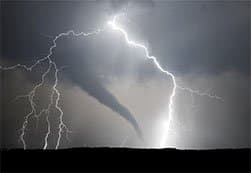
On average, the US has more tornadoes per year than anywhere else on Earth, according to the Insurance Information Institute (III). With deadly, strong winds and storms, tornadoes cause billions of dollars in damages.
Tornado facts
- Tornadoes most frequently occur from March until June but can happen any time
- Signs of tornadoes include dark, greenish skies, hail and a loud roar
- Tornados can move in any direction.
How to prepare for a tornado:
- Make a home inventory.
- Cut away dead foliage around your home
- Make sure to secure shutters or loose materials
- Stay indoors and away from windows during tornado warnings and watches
Hail
According to the Insurance Information Institute (III), between 2000 and 2019, hail related damages averaged between $8 million and $14 million per year. Hail can cause serious damage to your vehicle and your home's roof no matter the size of the hail.
Hail facts from III:
Nebraska, Colorado, and Wyoming traditionally have the most hailstorms each year
Texas had the largest number of hail claims from 2017 to 2019
In 2019, more than 7.1 million US properties were affected by 1 or more damaging hail events
How to prepare for hail:
- Park your car (before the storm) in a garage or under a structure to protect from damage
- Stay inside and under cover
- After the storm, take pictures of the hail damage
Wildfires
Wildfires are becoming more common across many parts of the country. As one of the most destructive forces of nature, here are a few things to know about wildfires:
Wildfire facts
- May through October has historically been considered "wildfire season".
- Wildfires can happen anywhere and anytime.
- They're more likely to occur during periods of drought and high winds.
How to prepare for wildfires:
- Make a home inventory
- Create a defensible space around your home to reduce the risk of the fire spreading
- Cut back brush and clear dead foliage, and plant fire resistant and fire retardant plants
- Be ready to leave at a moment's notice
- Have important documents, medications, pets, and supplies ready to go