What is a Home Insurance Deductible?

Key Takeaways
Understand What a Home Insurance Deductible Is
A home insurance deductible is the amount you pay out-of-pocket before your insurer will cover the rest of a covered claim—directly affecting your claim payouts and policy cost.
Choose Your Deductible for the Right Balance
Opting for a higher deductible can lower your premiums, while a lower deductible means you’ll pay less out of pocket if you file a claim. Assess your budget and risk comfort before deciding.
Special Deductibles May Apply
Events like hurricanes, windstorms, or hail may have their own specific deductibles. Review your policy details so you’re prepared for any situation.
Understanding Types, Pros and Cons, and How to Choose the Right Deductible
Your home is one of your largest investments, so ensuring it’s properly protected is essential. A key part of that is understanding how your home insurance deductible works. In this blog, we’ll explain the different types of deductibles, outline their pros and cons, and help you choose the one that fits your needs and budget.
What Is a Home Insurance Deductible?
A home insurance deductible, or homeowners insurance deductible, is the portion of a covered claim that you pay out of pocket before your insurance kicks in to cover the rest. For example, if your deductible is $1,000 and you file a claim for $5,000 in damage, your insurer would pay $4,000 after you pay your portion.
Deductibles typically apply to property-related claims, like damage to your home or belongings from a covered event such as fire or wind. They do not usually apply to liability coverage, which helps pay for things like medical bills or legal expenses if someone is injured on your property.
Each time you file a claim for a covered peril, your deductible applies. That means if you have multiple claims, you’ll need to pay the deductible amount for each one individually. If you carry additional policies, like flood or earthquake insurance, those coverages come with their own separate deductibles.
Types of Home Insurance Deductibles
There are two types of home insurance deductibles: flat-dollar and percentage-based. Let’s take a closer look at each option.
Flat-Dollar Deductibles
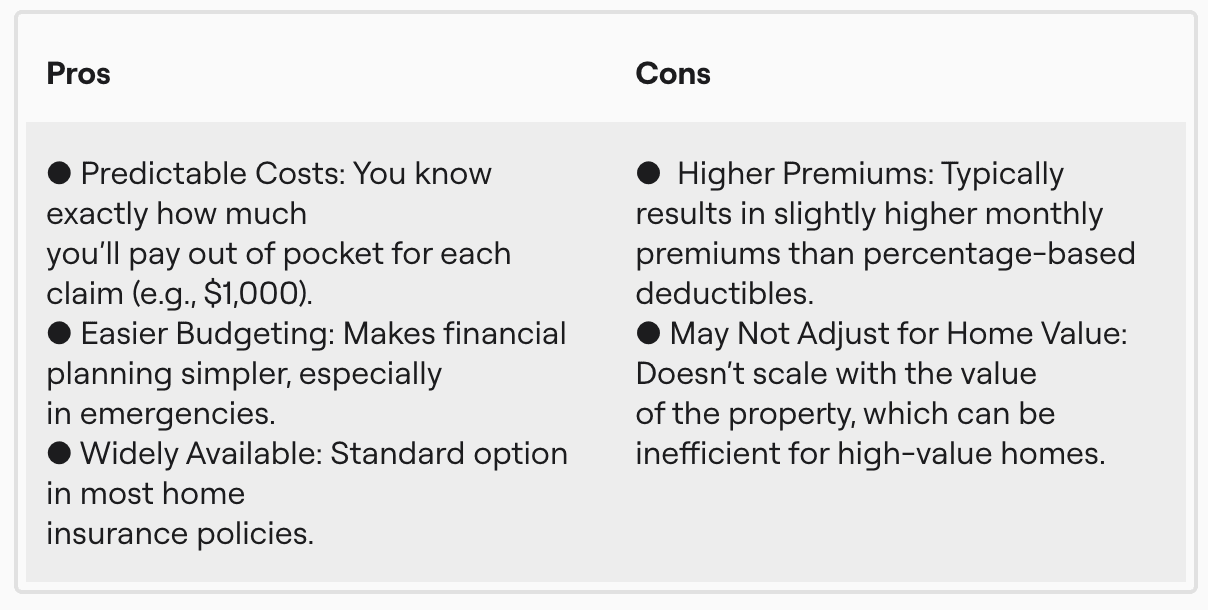
A flat-dollar deductible is a set amount you agree to pay out of pocket for each claim, like $500, $1,000, or $2,500. This is the most common type of deductible and tends to be straightforward and easy to manage. It's a good choice if you prefer predictable costs or live in an area with a lower risk of large-scale damage.
Percentage-Based Deductibles
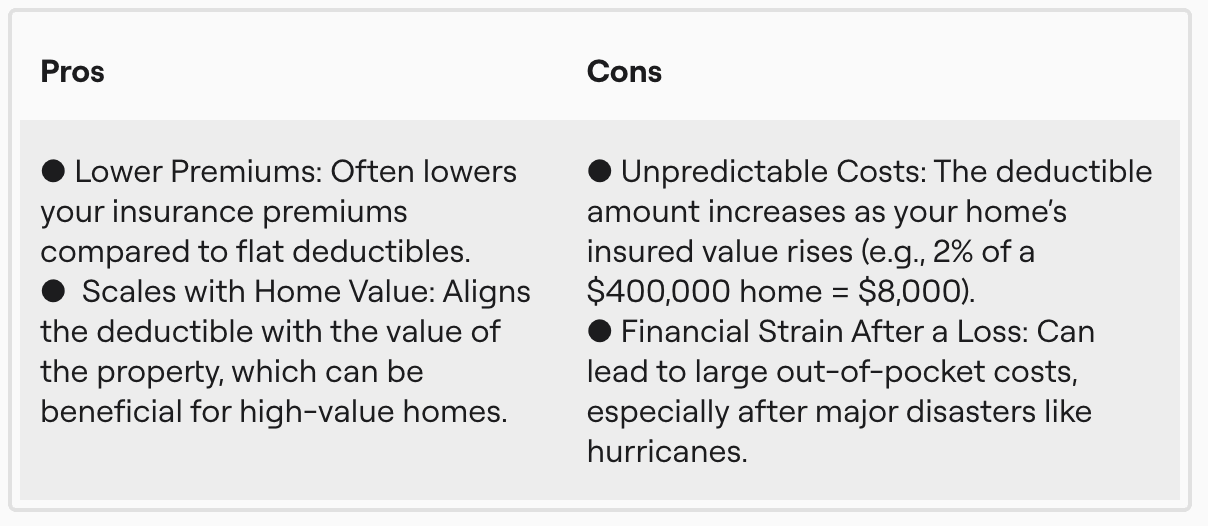
Percentage-based deductibles are calculated as a percentage of your home’s insured value. For example, if your home is insured for $300,000 and your deductible is 2%, you’d be responsible for the first $6,000 of a covered claim. These are often used in areas where natural disasters like hurricanes, windstorms, or hail are more common.
This type of deductible may work well for homeowners who want lower premiums and are prepared to take on more risk in the event of a major claim.
Tips for Choosing the Right Home Insurance Deductible: Balancing Affordability with Adequate Protection
Picking the right home insurance deductible is about finding a balance between what you can afford today and the protection you’ll need if the unexpected happens. Here are a few tips to help you make the best choice for your situation:
- Assess Your Emergency Savings: Choose a deductible you could comfortably pay out of pocket if you had to file a claim tomorrow.
- Compare Premium Savings: Ask your insurer or use an online quote tool to see how much you'd save with a higher deductible. Sometimes the savings aren't worth the risk of a bigger bill during a claim.
- Consider How Often You Might File a Claim: If you rarely file claims and keep your home in good shape, a higher deductible might work. But if you live in an area prone to storms, theft, or other risks, a lower deductible could be the safer choice.
- Match Your Deductible to Your Risk Tolerance: If you're comfortable with more risk and want to lower your premium, a higher deductible may be a smart move. If you'd rather pay a bit more each month for peace of mind, go with a lower deductible.
- Review the Fine Print: Some policies have different deductibles for different types of damage, like wind or hail. Make sure you know how your policy handles those situations.
- Reevaluate Annually: Your finances, home, and local risks can change. When it’s time to renew your policy, take another look at your deductible to be sure it still fits your needs.
Protect Your Property with Homeowners Insurance Through the GEICO Insurance Agency
Choosing the right home insurance deductible is an important part of building a policy that fits your needs and budget. Ready to get started? Get a fast, free homeowners insurance quote through GEICO Insurance Agency and see how easy it is to protect what matters most.