What Renters Insurance Usually Does Not Cover

Key Takeaways
- Renters insurance typically does not cover floods, earthquakes, sinkholes, normal wear and tear, pest infestations, or intentional damage.
- Renters insurance generally covers your belongings rather than damage to the rental building or structure, which is typically the landlord’s responsibility.
- High-value items may have coverage limits, so jewelry, collectibles, electronics, and other valuables may need additional coverage.
- Roommates’ belongings generally aren’t covered by your policy unless the roommate is specifically included under the policy terms.
- Some coverage gaps may be addressed through separate policies, endorsements, or increased limits, so review your policy to understand what is and isn’t covered.
Since renters insurance does not cover every type of damage or loss, it’s crucial for renters to understand policy exclusions, coverage limits, and optional add-ons before they ever need to file a claim.
While a standard renters policy may help cover certain expenses after covered events, it often excludes floods, earthquakes, sinkholes, wear and tear, and intentional damage. In many cases, high-value items such as jewelry or collectibles may not be fully excluded, but coverage could be limited unless additional protection is added. Coverage details and exclusions can also vary by insurer, policy type, and state.
Understanding what renters insurance does not cover can help renters avoid costly surprises and identify where additional protection may be needed.
Some gaps can require a separate policy, such as flood or earthquake insurance, while others may be addressed through endorsements or increased coverage limits. Certain damages, including structural issues with the building itself, are typically the landlord’s responsibility, and some risks simply fall outside the scope of renters insurance altogether.
Reviewing policy details carefully or getting a renters insurance quote through GEICO Insurance Agency can help renters better understand their options and choose coverage that fits their needs.
Damage From Floods, Earthquakes, and Sinkholes
Basic renters insurance usually does not cover flood, earthquake, or sinkhole damage, so renters in higher-risk areas may need separate coverage.
With flood claims, the source of the water matters. Damage caused by rising water, storm surge, or overflowing rivers that enter the home is typically excluded from flood damage. However, some sudden indoor water events, such as a burst pipe or an overflowing appliance, may be covered because the water originated inside the building rather than from outside flooding.
Earthquakes and other forms of ground movement are also commonly excluded from standard renters insurance policies. Renters who want protection for belongings damaged by these events may need a separate policy or endorsement, depending on the insurer and state.
What to do instead:
- Consider flood insurance if flooding is a concern.
- Ask about earthquake coverage if you live near a fault line.
- Check your lease and local risk before assuming the landlord’s policy helps with your belongings.
Damage to the Building or Rental Structure
When it comes to the building or rental structure itself, including the roof, walls, appliances owned by the landlord, or shared property areas, renters insurance usually does not cover damage. Instead, renters insurance is generally designed to help protect the renter’s personal belongings, provide liability coverage, and help with additional living expenses after certain covered losses.
While damage caused by a renter could create liability questions depending on the situation, renters insurance is not the same as building coverage. Renters should report maintenance problems or structural damage to the landlord as soon as possible so repairs can be addressed and potential damage does not worsen.
Who handles what:
- Landlord: building, roof, walls, common areas.
- Renter: personal belongings and selected renter coverages.
- Policy/lease: determines responsibility in specific situations.
Pest Infestations, Mold, and Gradual Damage
Damage caused by pests, normal wear and tear, or gradual maintenance problems are generally not covered by renters insurance.
Issues involving termites, rodents, and other insects are commonly excluded because the damage typically develops slowly over time rather than from a sudden, accidental event. Since renters insurance is generally intended for unexpected, fast-happening incidents, long-term infestations and ongoing property deterioration are usually considered maintenance issues instead of covered losses.
Mold caused by long-term moisture, poor ventilation, or neglected leaks is usually excluded for the same reason. In many cases, rust, rot, corrosion, and general deterioration are also considered preventable damage that develops gradually over time rather than suddenly.
Because these issues can worsen quickly if ignored, it’s critical that renters report leaks, pest problems, and maintenance concerns to the landlord as soon as possible to help prevent larger property damage.
Intentional Damage, Negligence, and Illegal Activity
Coverage is typically excluded when damage results from intentional acts, criminal activity, or serious negligence rather than accidental loss.
Insurers generally do not pay claims for damage caused on purpose by the policyholder, nor for losses tied to illegal activity or situations where a claim involves misrepresentation or fraud. Even when the damage is not intentional, coverage may also be denied if the loss stems from negligence or a failure to address a known, preventable issue—such as ignoring a worsening hazard that leads to avoidable property damage.
The core distinction is that policies are structured to respond to unexpected, accidental events, not deliberate actions or avoidable outcomes.
Roommate Belongings
For those living with a roommate, the roommate’s belongings are generally not covered under a renters insurance policy unless they are specifically named on the policy or otherwise included under its terms. In most cases, renters insurance follows the named insured, meaning each person needs their own policy to protect their own personal property.
Shared living situations can create confusion during claims—for example, if two roommates share a living room TV and it is stolen, the insurer may only cover the portion owned by the policyholder unless ownership can be clearly established. Relatives and domestic partners may be treated differently depending on the insurer and state rules, sometimes allowing shared coverage under one policy—but this is not automatic and varies widely.
Because of these differences, roommates should not assume their belongings are protected under someone else’s policy and should confirm coverage details in advance. Without clear documentation, disputes over ownership can slow down or limit claim payouts—especially for shared or high-value items.
Shared apartment checklist:
- Who is named on the policy?
- Who owns which expensive items?
- Are shared items documented?
- Does each renter have their own policy?
High-Value Items and Policy Limits
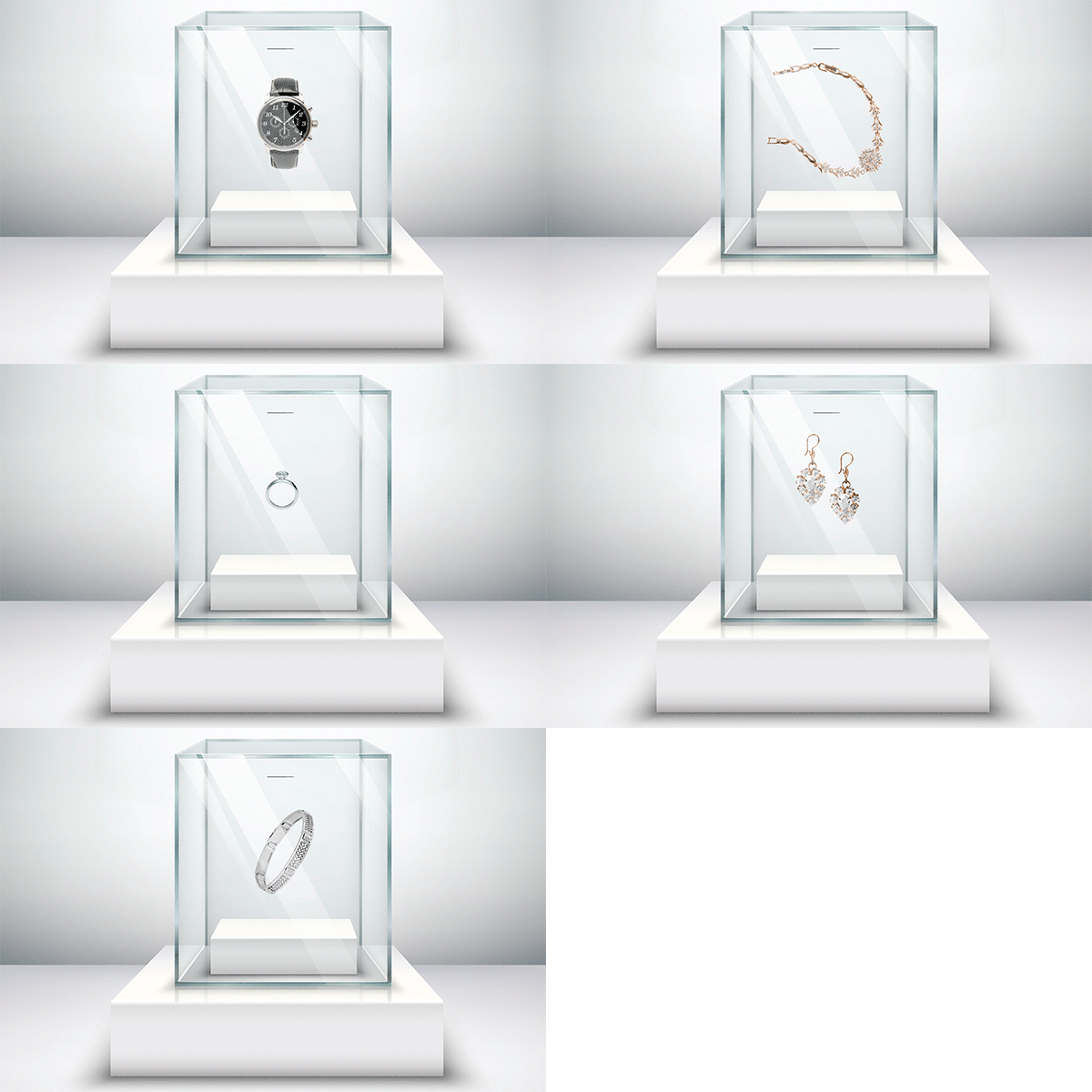
Renters insurance may cover high-value belongings, but only up to specific sub-limits, which means expensive items are often only partially protected unless additional coverage is added.
Common items affected by these limits include:
- Jewelry
- Watches
- Fine art
- Collectibles
- Musical instruments
- Electronics
- Cash
- Designer items
To increase protection, renters can add endorsements, riders, or scheduled personal property coverage, which allows these items to be individually listed and insured for their full value. Reviewing these limits is important because standard coverage may not reflect the true replacement cost of high-value possessions.
Business Property and Work-From-Home Equipment
Business equipment, inventory, supplies, and liability related to a home-based business are often not fully covered by renters insurance because these policies are designed for personal use, not commercial activity. As a result, insurers typically limit or exclude coverage for business-related risks since they involve higher exposure and different liability structures.
These items can include:
- Work laptops and equipment
- Side hustle inventory
- Client property
- Customer or client injuries
- Professional instruments used for paid work
Employer-owned equipment is usually covered under the employer’s commercial insurance rather than a renter’s policy, while business-owned property and liability may require a separate business insurance policy or a specific endorsement added to the renters policy. This helps ensure both personal and business risks are properly separated and covered under the appropriate plan.
Vehicles, Vehicle Parts, and Belongings in a Car
Renters insurance does not cover vehicles themselves, but it may cover personal belongings stolen from inside a car, depending on the policy and coverage limits.
It can sometimes apply to items taken during car theft, but it does not pay for vehicle damage, stolen vehicle parts, or repairs to the car itself, which are handled under auto insurance. Liability related to vehicle use is also excluded, since that falls under auto insurance rather than renters coverage.
Because of this separation, auto insurance is required to protect the vehicle itself, including theft, collision damage, and liability arising from driving or ownership.
Undocumented Belongings and Claim Limits
A renters insurance claim may be denied or underpaid if the renter cannot provide sufficient proof of ownership, value, or the circumstances of the loss, since insurers rely on documentation to verify what was lost and how much it was worth.
This makes it vital to consistently document belongings over time so claims can be processed accurately and without delays or disputes.
Records to keep include:
- Receipts
- Photos
- Serial numbers
- Appraisals
- Home inventory
- Proof of loss
Here, it’s also crucial to understand the distinction between replacement cost coverage and actual cash value coverage.
Replacement cost coverage pays to replace items at today’s prices without deducting for depreciation, while actual cash value coverage pays the item’s current value after depreciation. Replacement cost policies typically have higher premiums but provide larger payouts, while actual cash value policies are cheaper but may result in lower reimbursements at the time of a claim.
What Renters Can Do About Common Coverage Gaps
While standard renters insurance doesn’t cover everything, renters can often address common coverage gaps through careful review, documenting their belongings, or purchasing separate policies for risks that are excluded.
Here are the key steps to keep in mind:
- Review exclusions and special limits.
- Ask about flood insurance if needed.
- Ask about earthquake coverage if needed.
- Consider scheduled personal property for valuables.
- Each roommate should review their own coverage.
- Create and update a home inventory.
- Report maintenance issues to the landlord quickly.
- Review business equipment or work-from-home needs.
Following these steps can help ensure your coverage better matches real-world risks and reduces surprises when filing a claim.
Get a Renters Insurance Quote Through GEICO Insurance Agency
A renters insurance quote through GEICO Insurance Agency can help you review coverage options for your belongings, liability needs, and common renter risks in a way that reflects your specific situation. While general averages and examples can be helpful for understanding how renters insurance works, they don’t replace the details of an actual policy, since coverage, limits, exclusions, and deductibles vary by provider and individual plan.
GEICO Insurance Agency can help connect renters with coverage options from partner insurers so they can compare choices and find a policy that fits their needs.
Through GEICO Insurance Agency, renters can find coverage options and select a policy that best fits their needs.
Get a renters insurance quote through GEICO Insurance Agency today!