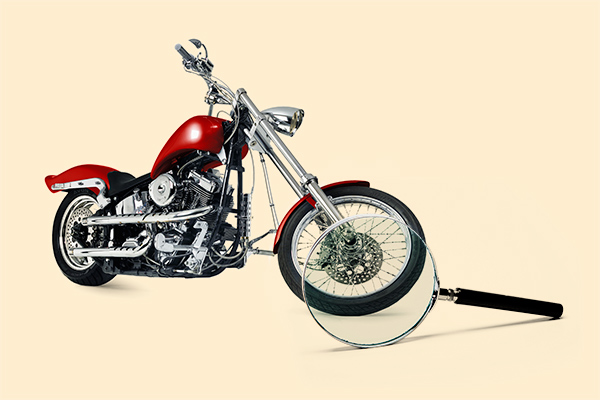
Buying a pre-owned motorcycle can be a great value—if you find one that’s in good condition and comes with its paperwork in order.
The biggest thing to keep in mind when buying a used motorcycle is to not rush through the process, says Tera Kirby of Reed’s Motorcycles in Hurst, Texas. “People get in a hurry and may just want to buy the first bike that fits their budget,” she says. “But that may not be in their best interest.”
Instead, she recommends taking the time to find the right motorcycle for your price range. Here’s what to do.
1. Look For Damage
Visually inspect the motorcycle and make sure there aren’t any major scratches or dings. Pay special attention to the gas tank; if it’s dented, it may need to be replaced. Look at the exhaust pipes, too, and check for any bluing on the metal, which could indicate that the motorcycle overheats.
2. Check The Tires
“Stick your fingers in the tire tread,” says Kirby. “If it covers the tip of your finger, it’s in good shape.” If it doesn’t, or if the tires are worn on one side or the other, it might indicate a problem with the alignment or possibly a bent wheel. Also make sure the fender isn’t touching the tire, which could cause abnormal or uneven wear.
3. Listen To The Engine
The sound should be smooth and clean. Listen for any knocking or rattling, which could be something as simple as a loose bolt or be indicative of a bigger problem. Also pay attention to the idling; rough sounds could indicate a problem with the gas or mean that the engine hasn’t run for a while.
4. Assess The Oil
When you look in the oil window or pull out the dipstick, you want to see a dark brown, semi-translucent fluid. If the oil is black, it hasn’t been changed recently. Also check underneath the motorcycle for leaking oil, which could indicate a problem with the primary gasket (or something worse).
5. Check The Mileage
Make sure the odometer has a reasonable number of miles on it. All zeroes or an oddly low mileage could mean the entire speedometer has been replaced and the motorcycle is TMU, or “true miles unknown.”
6. Ask For Paperwork
Has the motorcycle been in an accident or had major repairs? Have there been recalls on it? Doing a search on the Vehicle Identification Number, or VIN (located vertically on the steering neck), can tell you everything that’s known about the motorcycle’s history, including whether it was stolen. It will also help you be sure the bike has a clear title, one that’s free of liens.

7. Take A Test Drive
Sit on the motorcycle to be sure it’s the right size; you should be able to put your feet flat on the ground for stability. Then go for a short ride—even just a mile is enough. “Make sure the bike is comfortable and not too heavy,” says Kirby. “You need to know you can handle it.”
8. Have It Inspected
A dealership should have a certified mechanic who has already checked out the motorcycle, but if it doesn’t, or if you’re buying from an individual, have the motorcycle inspected by an outside mechanic before you buy.
9. Research The Price
To determine whether the asking price is fair, make sure similar models are priced in the same range. Check motorcycle dealerships and online sources, and if the asking price seems too high—or low—ask why. If you think the price is high, don’t be afraid to negotiate.
Once you’ve selected the perfect used motorcycle, help protect it with motorcycle insurance from GEICO. Get rolling with a quick quote.